
Getting to the Heart of the Matter
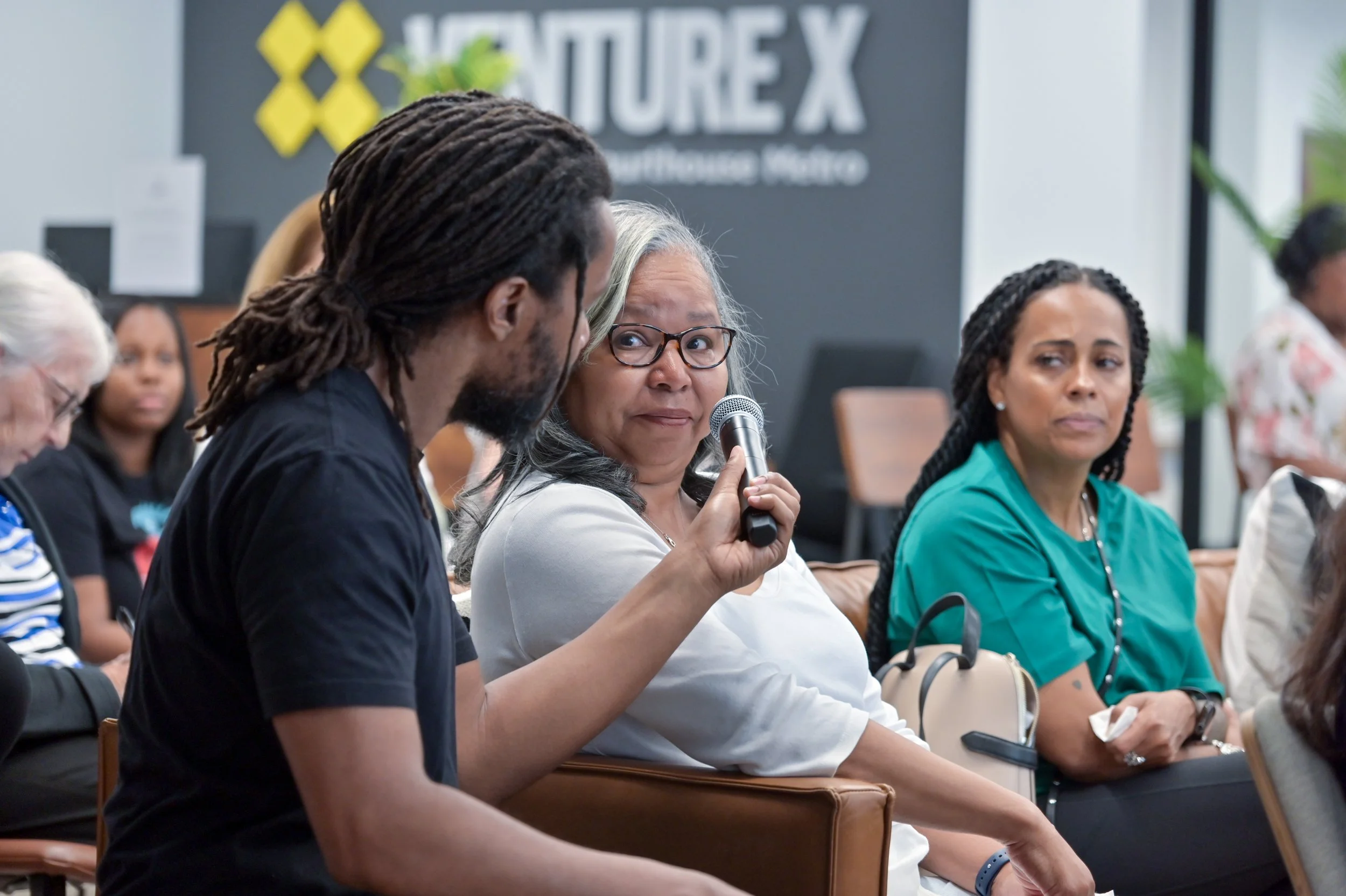
Photo by J. Michael Whalen
“How did you go from feeling uncomfortable, to feeling comfortable, talking about death and dying?”
John asked the question into the microphone as the twenty people in the audience looked him in the eye. Behind him on the stage were a musician and 4 actors, all dressed in black.
Even though the question was a daunting one, the audience members weren’t shying away from it. They were, after all, people who worked in the field of grief, death, and dying.
It wasn’t long until someone raised her hand; I’ll call her M.
John approached M and asked her where her story began. Guided by John’s intuitive questions, M shared the story of a former mentor who died and about her sister’s sudden death. She talked about her personal journey of feeling uncomfortable to feeling comfortable talking about death and dying.
You could have heard a pin drop; everyone - both the group on the stage and the group in the audience - was listening deeply, intently, and non-judgmentally.
After M finished sharing her story, the entire room, prompted by John, said, “M, let’s watch.”
Immediately, music filled the air by the on-stage musician. As the music stopped, the first actor stepped forward, portraying a portion of M’s story, honoring her story with integrity and artistry.
More music, then another actor came forward, each reflecting back a different aspect, character, or perspective from M’s story.
The music weaved in and out of the actors’ portrayals, capturing the essence of M’s story, reflecting it with honesty and creativity.
Immediately after they played back M’s story, the actors and musician made eye contact with her, honoring her. John came back to her side and asked her what it was like to watch her story played back.
M’s tears spoke volumes.
***
When was the last time you felt truly seen, heard, and understood?
If you’re like most people, the answer is along the lines of “I don’t even remember the last time I felt that way."
It’s unfortunate that most of the time, we feel isolated in our experiences, unsure if anyone can relate to what we are thinking and feeling. We wonder if we are the only ones.
We are social creatures who not only want, but actually need, connection to one another.
***
What we do at Compassionate Coaching is help people feel seen and heard on a very deep level. We use a variety of modalities to accomplish this goal. The experience above reflects our use of Playback Theatre.
Playback Theatre was founded in 1975. It is an improvisational art form that incorporates storytelling, movement, music, and drama. Unlike other improvisational theatre, the primary goal of a Playback performance is to honor audience members’ stories, not provide entertainment for its own sake.

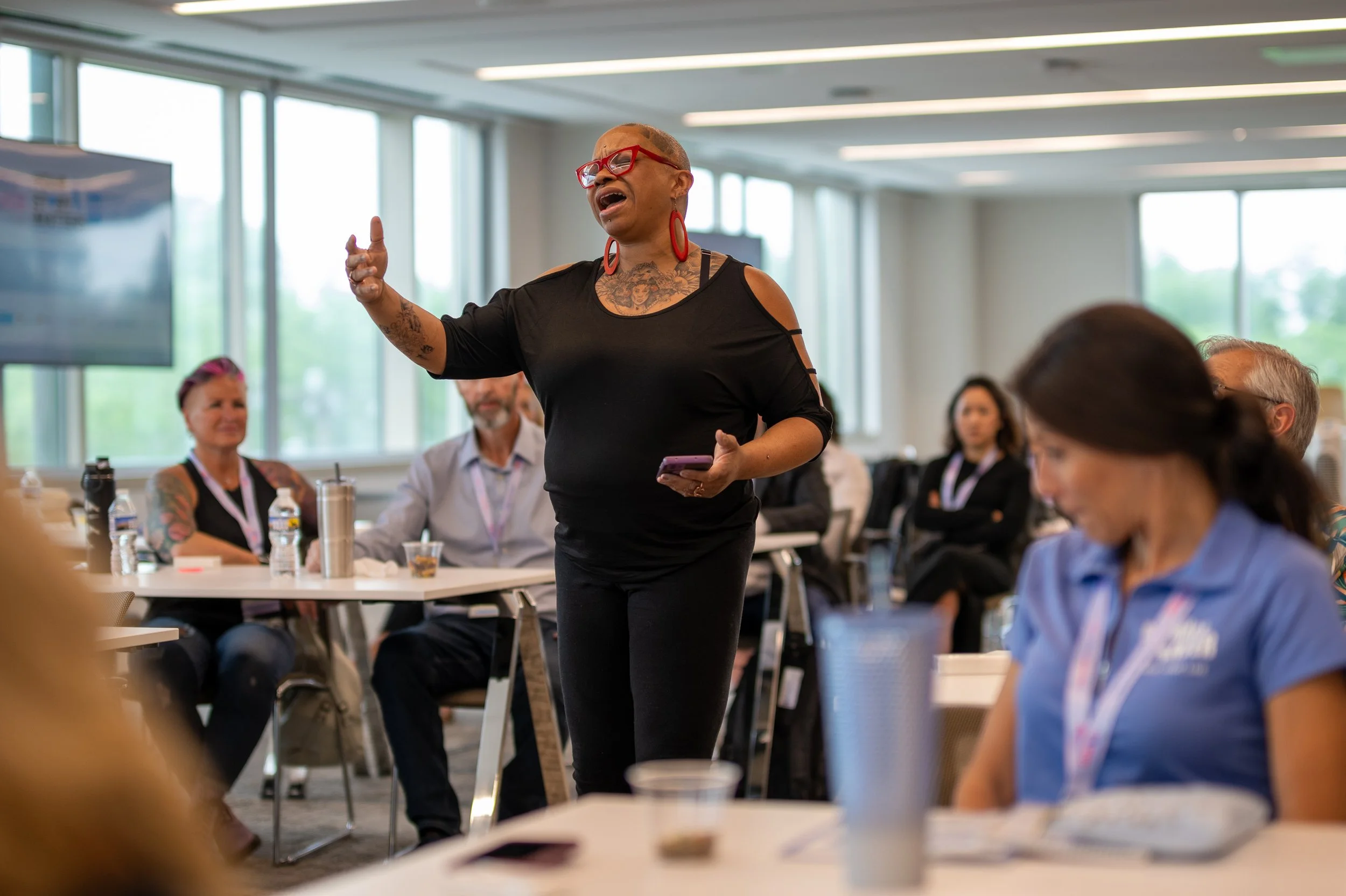
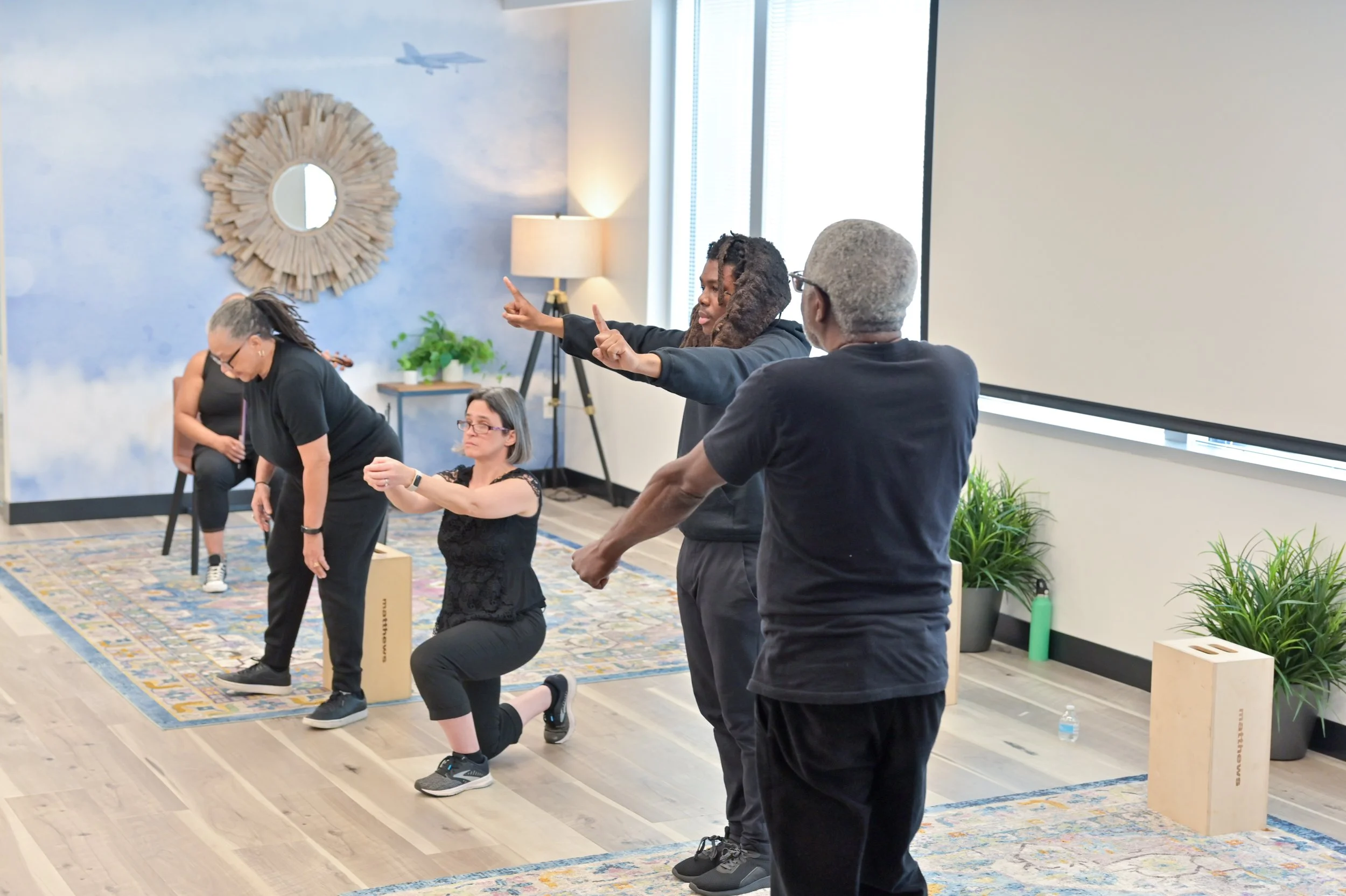
The Playback actors and musician listen closely to someone’s story. They pick up on verbal and nonverbal cues. They listen for the deeper meaning and tap into the emotions that fuel the story.
In other words, they get to the heart of the matter.
They empty themselves of biases, distractions, and their ego. They tap into their own humanity to bring the story to life, one human to another.
They listen to understand, not respond.
And if I’ve learned anything from my 14 years as a Playback Theatre practitioner, it’s that these skills can help heal our broken world.
If we listen closely to one another…
If we empty ourselves of bias, distraction, and our own ego…
If we listen for verbal and nonverbal cues…
If we tap into our own humanity to understand another’s story…
If we listen to understand, not respond…
…then maybe, just maybe, we can get to the heart of the matter.
We can see each other as fellow humans - complex, fragile, strong, beautiful humans - each with a story to tell.
If you are an end-of-life or bereavement professional / volunteer, and you want to experience the power of Playback Theatre, click here to register for our next Storytelling Workshop!